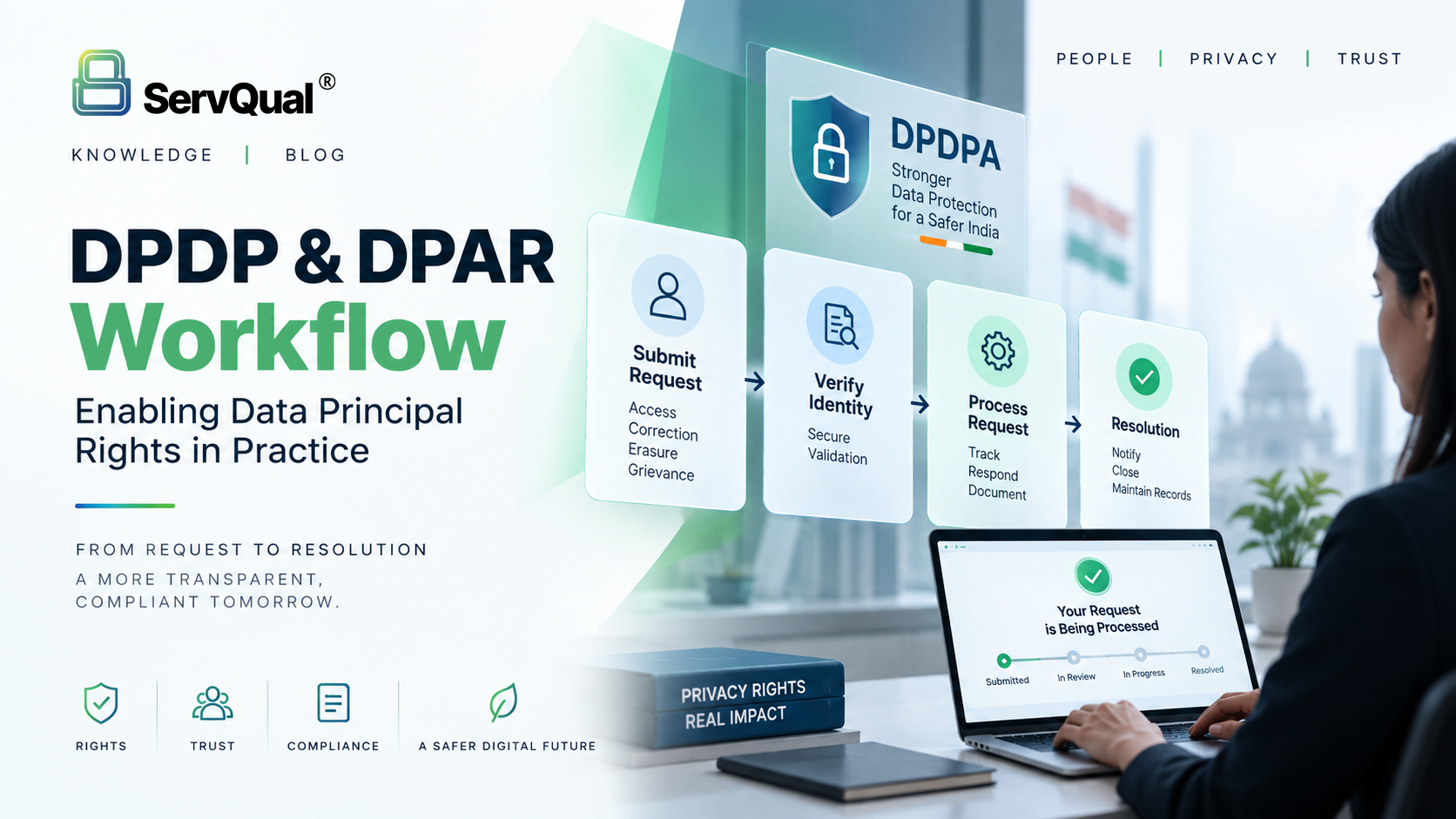
A DPDP DPAR workflow is the operational process used by a Data Fiduciary to receive, verify, triage, fulfill and evidence Data Principal rights requests under India’s DPDP framework.
A strong workflow should handle access, correction, updating, erasure, grievance redressal, nomination and consent withdrawal through one tracked queue. It should include identity verification, data discovery, system-level fulfillment, processor propagation, secure response delivery, escalation and audit-ready evidence.
Executive Summary
India’s DPDP framework gives Data Principals enforceable rights over their personal data. For organizations, those rights must become repeatable operational workflows, not ad hoc email handling.
A DPAR workflow should help teams receive requests, verify identity, classify the request type, discover relevant data, fulfill the request, respond securely and retain evidence. The workflow should also account for downstream processors, legal retention duties, consent withdrawal and grievance escalation.
Operational success depends on three foundations: a current data map, a tracked request queue and clear ownership across privacy, legal, IT, security and system owners.
This blog explains how to build a practical DPAR workflow for access, correction, erasure, grievance, nomination and consent withdrawal, with evidence that can support audit and regulator review.
What Is a DPDP DPAR Workflow?
India’s Digital Personal Data Protection Act gives individuals, called Data Principals, enforceable rights over their personal data. For organizations, called Data Fiduciaries, every right becomes an operational workflow: a Data Principal Access Request, or DPAR, that must be received, verified, fulfilled and evidenced within defined timelines. This is how to build that machinery properly.
The Rights Behind Data Principal Requests
The DPDP Act 2023, with its accompanying rules, grants Data Principals a compact but powerful set of rights, and each maps to a request type your workflow must handle:
| Right | What the Data Principal Can Ask | Operational Implication |
|---|---|---|
| Access to information | A summary of personal data being processed, the processing activities, and the identities of other fiduciaries and processors with whom data was shared | You need a queryable map of what data you hold about a person and where it has flowed |
| Correction and updating | Correct inaccurate data, complete incomplete data, update outdated data | Edits must propagate to every system and downstream processor holding the record |
| Erasure | Delete personal data no longer necessary for the specified purpose, subject to legal retention duties | Deletion logic must respect statutory retention, then actually delete across systems and backups policy |
| Grievance redressal | Raise a grievance and receive a response through a readily available mechanism | A tracked grievance channel with escalation before the Data Principal approaches the Data Protection Board |
| Nomination | Nominate another person to exercise rights in case of death or incapacity | Identity handling for nominees and secure storage of nomination records |
| Consent withdrawal | Withdraw consent as easily as it was given | Withdrawal must halt processing based on that consent across all systems, promptly |
Significant Data Fiduciaries carry extra duties, including a Data Protection Officer based in India and periodic audits, which raises the evidentiary bar for how DPARs are handled. And the consequences of sloppy handling are material: the Act empowers the Data Protection Board to impose penalties reaching into hundreds of crores of rupees for serious breaches of obligations.
End-to-End DPAR Workflow
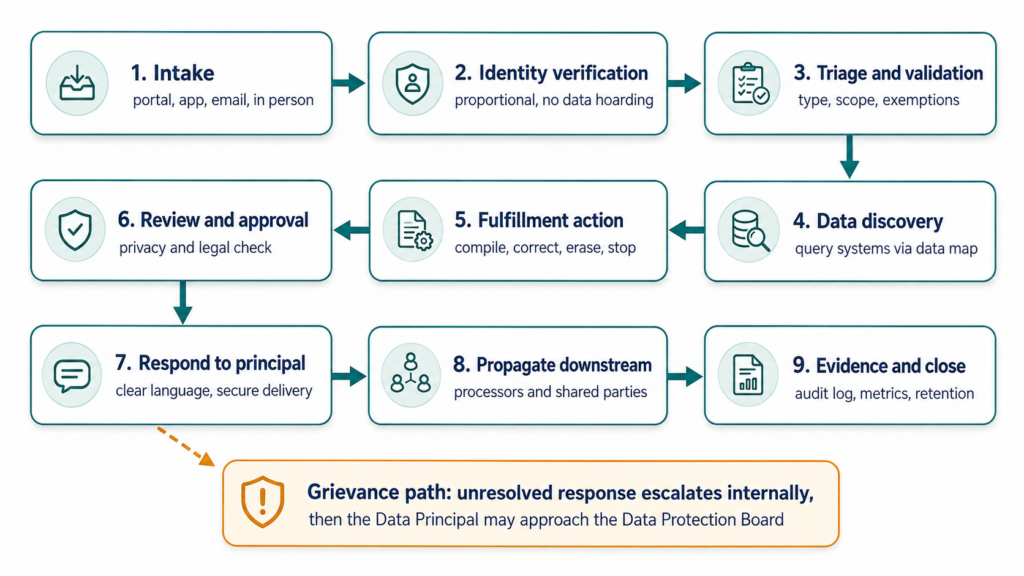
Figure 1. Nine stages every DPAR passes through, with the grievance path as the pressure valve.
Stage 1: Request Intake
The Act expects fiduciaries to publish the means for exercising rights, so intake should be prominent: a rights portal or in-app form as primary channel, with email and offline routes funneling into the same queue so nothing lives in a personal inbox. Capture the request type, the identity claim, and the consent artifact reference where relevant, since the rules tie requests to the notice and consent trail.
Stage 2: Identity Verification
Identity verification is where many programs stumble in both directions. Too weak, and you hand someone’s data to an impostor, which is itself a breach. Too strong, and you collect fresh identity documents you must then protect, contradicting data minimization. The right pattern is proportionality: verify through the channel the person already uses, such as a login session or an OTP to the registered contact, and reserve document checks for high sensitivity disclosures or nominee cases. Record what was checked, not copies of everything shown.
Stage 3: Triage and Deadline Tracking
Classify the request type, confirm the requester is a principal whose data you actually hold, and screen for exemptions such as processing for compliance with law, enforcement of legal claims, or statutory retention that blocks erasure. Set the clock: track every request against your published service level, and treat the response commitments in your grievance policy as binding deadlines with escalation when 70 percent of the window is consumed.
Under current DPDP Rules guidance, Data Fiduciaries should address access, correction, updating and erasure requests within a maximum of ninety days. Organizations should still define tighter internal service levels where possible, with escalation before the deadline is at risk.
Stage 4: Data Discovery
This is where privacy meets engineering. Fulfillment quality is decided long before any request arrives, by whether you maintain a living data map: which systems hold personal data, keyed by which identifiers, for which purposes, shared with which processors. With that map, discovery becomes a set of queries or API calls per system; without it, discovery becomes archaeology.
Stage 5: Fulfillment
- Access: compile a readable summary of data categories and processing activities, not a raw database dump, plus the list of fiduciaries and processors data was shared with where required.
- Correction: apply the change in the system of record and propagate through the same pipelines that spread the original data, then confirm propagation.
- Erasure: delete or anonymize in primary systems, suppress in caches and analytics, flag backups so restored data is re-deleted, and honor legal retention by isolating rather than actively processing data that must be kept.
- Consent withdrawal: update the consent state centrally and ensure every dependent processing activity reads that state, including marketing platforms and processors.
Build once, serve many: an internal fulfillment API per system, with operations like export, correct and erase for a given identifier, turns every future request type into orchestration instead of engineering. Privacy automation platforms and consent managers can orchestrate, but they still depend on those hooks existing.
Stage 6: Privacy Review
A privacy reviewer checks the package before release: does the export contain another person’s data, does an exemption apply, is the language plain enough for a non-technical reader, and where relevant, is the response available in the languages the rules contemplate.
Stage 7: Secure Response Delivery
Deliver the response securely to the verified channel, and capture the delivery record. The channel used to respond should be the one whose ownership was confirmed during identity verification, so the fulfillment effort is not undone at the last step by disclosure to the wrong recipient.
Stage 8: Processor Propagation
Then complete the often forgotten half of the job: instruct processors and other recipients to apply the same correction or erasure, and record their confirmations, because the fiduciary remains responsible for processing done on its behalf.
Stage 9: Evidence and Audit Trail
Finally, evidence everything: timestamps for each stage, the verifier, the systems touched, the approver and the delivery record, retained per your retention schedule. This log is what you will show an auditor, and what protects you at the Data Protection Board if a grievance escalates.
Roles, Metrics and Volume Readiness
Assign clear ownership: a DPAR process owner in the privacy office, the DPO or grievance officer as the accountable escalation point, system owners responsible for their fulfillment hooks, and legal on call for exemption judgments. Then instrument the process with a small set of metrics: requests by type and channel, median and 90th percentile turnaround, percentage completed within the committed window, rejection reasons, downstream propagation completion rate, and grievances per hundred requests.
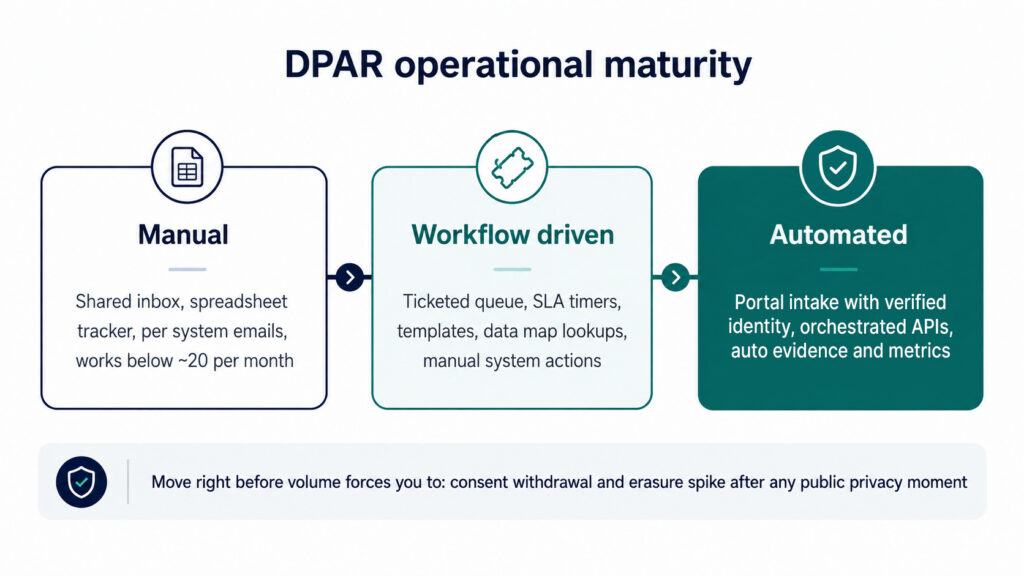
Figure 2. Maturity is driven by request volume and data sprawl. Automation pays off fastest for erasure and withdrawal.
Getting Started in 90 Days
In the first month, publish the intake channel, appoint the grievance owner, and stand up the tracked queue with SLA timers. In the second, build the data map for the ten systems holding the most personal data and script export and erasure for the top three. In the third, run an end-to-end drill for each request type, fix what breaks, and brief leadership on the metrics baseline. From there, expand system coverage and automate the repetitive steps. Data Principal rights then stop being a compliance anxiety and become what the Act intended: a routine, trustworthy service your organization provides to the people whose data it holds.
DPDP DPAR Workflow Checklist
Organizations operationalizing Data Principal rights should validate the following:
- Publish a clear rights request channel for Data Principals.
- Route email, offline and portal requests into one tracked queue.
- Capture request type, requester identity, consent reference and relevant identifiers.
- Verify identity proportionately through login session, OTP or stronger checks where needed.
- Classify the request as access, correction, updating, erasure, grievance, nomination or consent withdrawal.
- Track request deadlines and escalate before the committed window is at risk.
- Maintain a current data map showing systems, purposes, identifiers, processors and data flows.
- Build system-level fulfillment hooks for export, correction, erasure and consent withdrawal.
- Review responses for third-party data, exemptions and plain-language clarity.
- Deliver responses through a verified secure channel.
- Notify processors and other recipients where correction, erasure or withdrawal must propagate.
Retain audit evidence for intake, verification, decisioning, fulfillment, approvals, response and closure.
How ServQual and SUSAN Help
ServQual helps organizations strengthen privacy governance, cybersecurity, GRC, Privacy by Design, Secure by Design, incident response and audit readiness.
DPAR handling should not depend on scattered inboxes, spreadsheets and manual follow-ups. Data Principal rights require tracked workflows, ownership, evidence, processor coordination and visibility across privacy, legal, IT, security and business teams.
SUSAN can help organizations operationalize DPDP workflows by connecting data inventory, consent and purpose management, DPAR handling, grievance workflows, retention, deletion, DPO tasks and audit-ready evidence into one governance view.
With ServQual and SUSAN, organizations can:
- Track Data Principal rights requests from intake to closure
- Organize access, correction, erasure, grievance, nomination and consent withdrawal workflows
- Connect DPAR handling with data inventory and classification
- Track ownership, deadlines, escalation and evidence
- Support DPO workspace and privacy governance activities
- Maintain audit-ready evidence for privacy reviews
- Improve leadership visibility into DPDP readiness
- Move from manual request handling to continuous assurance
Explore DPDP Compliance Platform: https://srql.com/services/dpdp-compliance-platform/
Explore SUSAN: https://srql.com/services/susan/
Explore SUSAN Data Inventory and Classification: https://srql.com/services/susan-data-inventory-classification/
Explore Privacy by Design: https://srql.com/services/privacy-by-design/
Explore Governance, Risk, Compliance & Audits: https://srql.com/services/governance-risk-compliance-audits/
"Data Principal rights fail when they live in inboxes instead of tracked workflows."

Jayesh Thakkar
Solutions Consultant | ServQual
FAQ
Most frequent questions and answers
DPAR stands for Data Principal Access Request. It is a request from a Data Principal to exercise rights relating to their personal data, such as access, correction, erasure, grievance, nomination or consent withdrawal.
A DPDP DPAR workflow should support access to information, correction, updating, erasure, grievance redressal, nomination and consent withdrawal.
Identity verification prevents personal data from being disclosed, corrected or deleted by an unauthorized person. The verification method should be proportionate to the sensitivity of the request.
Organizations should provide a clear rights portal or in-app form where possible, while ensuring email and offline requests are routed into the same tracked queue.
Evidence should include request timestamp, request type, identity verification method, systems searched, decision record, approval, response delivery and downstream processor confirmations.
Erasure requests should be fulfilled across primary systems where deletion is allowed, while legal retention duties should be respected. Retained data should be isolated from active processing where appropriate.
Consent withdrawal should update the central consent state and stop processing activities that rely on that consent, including downstream platforms and processors where applicable.
SUSAN can help teams manage DPAR workflows, consent records, data inventory, grievance handling, retention, deletion, DPO tasks and audit-ready evidence in one connected governance view.
Operationalize Data Principal Rights with SUSAN
DPDP compliance requires more than publishing a privacy notice. Organizations need a tracked workflow for access, correction, erasure, grievance, nomination and consent withdrawal requests, with identity verification, processor coordination, secure response delivery and audit-ready evidence.
ServQual helps organizations strengthen privacy governance, DPDP readiness, Privacy by Design, GRC and audit preparedness. Explore SUSAN or contact ServQual to connect DPAR intake, data inventory, consent records, DPO tasks, processor follow-up and evidence into one continuous assurance workflow.
Disclaimer: This article is provided for general informational purposes only and does not constitute legal advice. DPDP requirements, rules and timelines may evolve, and their application depends on each organization’s specific circumstances. Organizations should consult qualified legal counsel for advice on their compliance obligations.