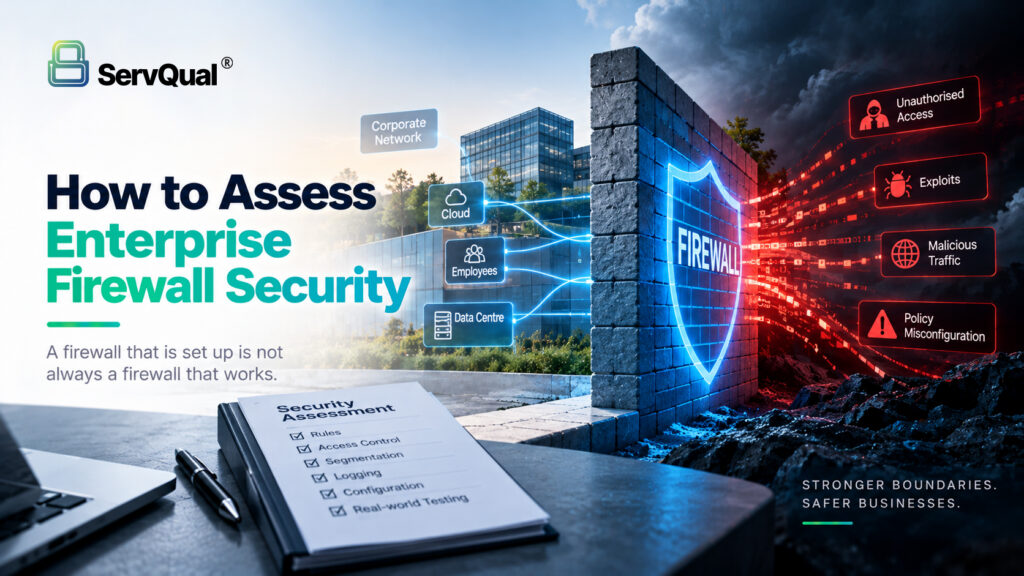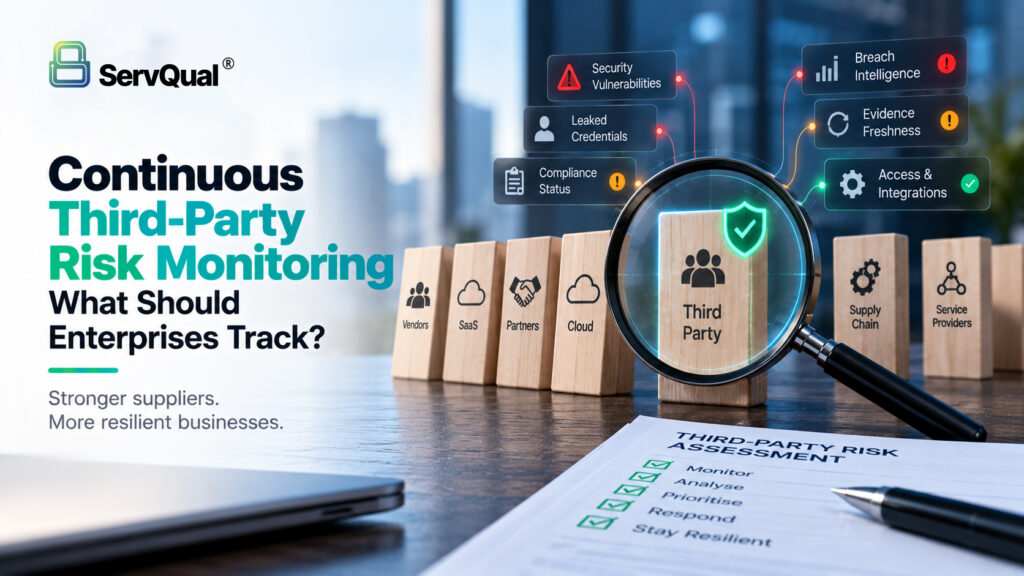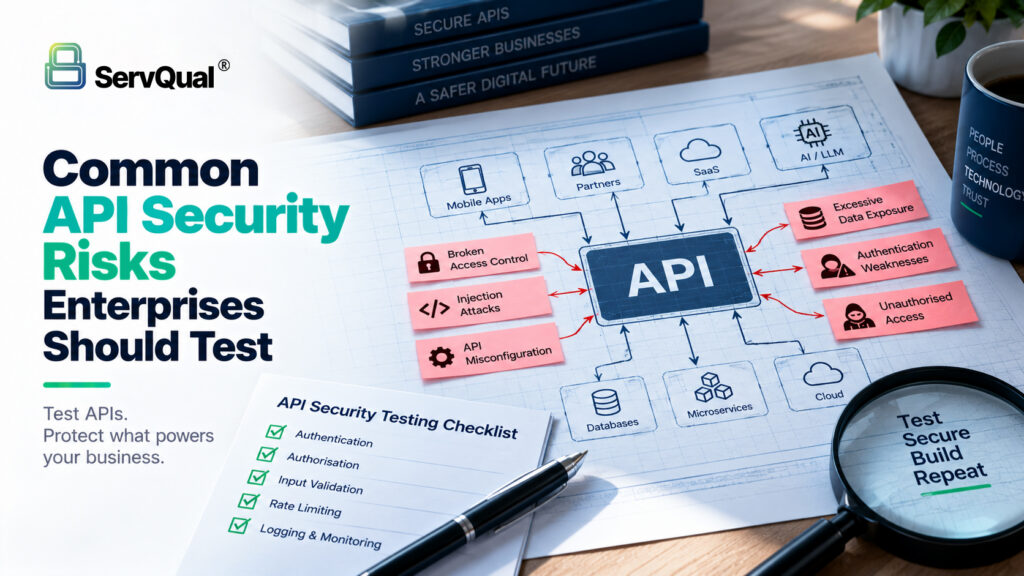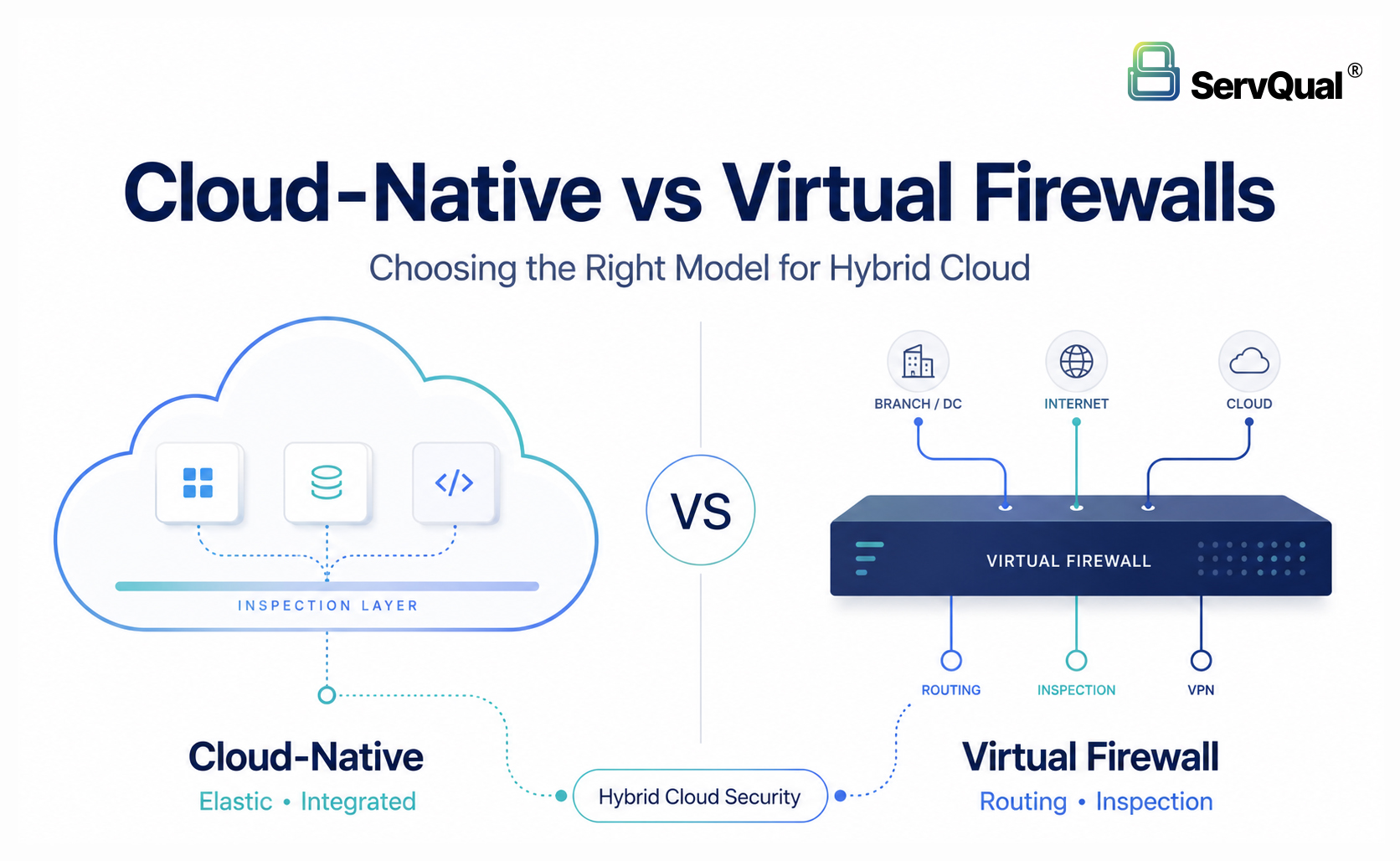
Cloud-native firewalls are managed firewall services built into public cloud platforms. They are fast to deploy, scale elastically and integrate with native cloud networking, logging, identity and infrastructure-as-code workflows.
Virtual firewalls are software versions of traditional firewall appliances that run as virtual machines. They provide deeper Layer 3 to Layer 7 inspection, mature VPN support, routing, zone-based segmentation and consistent policy control across on-premises and cloud environments.
For hybrid cloud, many organizations use both: cloud-native firewalls to protect workloads inside each cloud, and virtual firewalls to secure inter-site connectivity, VPNs, advanced inspection and consistent multi-cloud policy enforcement.
Executive Summary
Hybrid cloud changes firewall design. In a traditional data center, traffic often passed through a small number of physical firewall appliances. In public cloud, workloads are distributed across virtual networks, subnets, containers, serverless services and auto-scaling resources. There is no single physical perimeter.
Cloud-native firewalls solve part of this problem by giving teams a managed firewall service that integrates with the cloud platform. They are useful for cloud-first applications, workload protection, subnet filtering, elastic scaling and automated deployment.
Virtual firewalls solve a different problem. They bring familiar enterprise firewall functions into virtualized and cloud environments, including VPN, advanced routing, IDS/IPS, application control, deep traffic inspection, NAT and centralized vendor management.
The right design depends on workload location, inspection needs, cloud strategy, compliance requirements, routing complexity, VPN needs and operational maturity. In many hybrid environments, the strongest model is not cloud-native or virtual. It is a layered design that uses each where it fits best.
Why Hybrid Cloud Changes Firewall Design
When applications lived inside a single data center, firewall design was straightforward. Traffic entered and left through a small number of physical appliances placed at the perimeter, and every packet passed through a known chokepoint. Moving workloads into public cloud breaks that model. There is no physical edge to rack an appliance into, addressing is dynamic, and capacity changes on demand. Security controls now have to be defined in software and applied to resources that appear and disappear automatically.
Hybrid environments make this harder. A typical enterprise runs core systems on-premises, customer-facing applications in one or more public clouds, and connects branch sites over private links. Each cloud provider exposes its own networking constructs and its own security tools, so a single consistent policy is difficult to enforce. Traffic between these locations must be inspected, logged, and controlled without slowing delivery.
Two firewall models have emerged to address this. A cloud-native firewall is a security service built and operated by the cloud provider. A virtual firewall is a software version of a traditional appliance that runs as a virtual machine. Understanding where each fits is the key to a workable hybrid design.
What Is a Cloud-Native Firewall?
A cloud-native firewall is a security control delivered as a managed service inside a cloud platform. The provider runs the underlying infrastructure, and the customer defines policy through the cloud console, an API, or infrastructure-as-code templates. It integrates directly with cloud networking objects such as virtual networks, subnets, and route tables, so rules can reference native resource groups and tags rather than fixed IP addresses.
Deployment happens within the platform in minutes, with no operating system to patch and no appliance to size. Policy is managed centrally for the account or project, and the service scales elastically as traffic grows, adding capacity automatically during peak load. Because it is part of the cloud fabric, it connects cleanly to load balancers, logging pipelines, and identity services. Typical use cases include protecting internet-facing applications, filtering traffic between subnets, and securing container and serverless workloads that scale quickly.
What Is a Virtual Firewall?
A virtual firewall is the software form of a hardware firewall from an established vendor. It runs as a virtual appliance on a hypervisor, either on-premises or inside a cloud, and delivers the same feature set administrators already know. It performs routing and deep traffic inspection, applies security policy across defined zones, and supports advanced functions such as VPN, intrusion prevention, and application control.
Because it uses the same policy engine as the vendor’s physical products, existing rule sets can migrate with little change. Security policy is managed through the vendor’s central manager, which keeps configuration consistent across on-premises and cloud instances. Common enterprise deployments include data center perimeters, DMZ segments, secure segmentation between internal zones, and the termination point for site-to-site connectivity.
Cloud-Native Firewall Architecture
In a cloud-native design, workloads sit inside a VPC or VNet, the provider’s isolated virtual network. An internet gateway connects that network to the public internet. Public subnets host resources that must be reachable from outside, while private subnets hold databases and application tiers that should never face the internet directly.
Security policies are attached to subnets or resource groups and control what may pass. A cloud load balancer distributes incoming requests across the cloud applications behind it. Traffic between subnets inside the VPC is east-west traffic, and traffic entering or leaving the VPC is north-south traffic. The firewall service inspects both. Logging and monitoring feed native tooling and can be exported to an external SIEM for correlation and retention.
Virtual Firewall Architecture
A virtual firewall VM runs on a hypervisor that provides its compute and virtual interfaces. Those interfaces connect to an internal network for trusted systems, a DMZ for services exposed to outside users, and a WAN link for external connectivity. VPN connectivity terminates on the firewall to link remote sites and users securely.
The appliance provides IPS/IDS for threat detection and prevention, NAT to translate between private and public addressing, and routing to steer traffic between segments. Security zones group interfaces by trust level, and policy is written between zones, for example allowing controlled flows from DMZ to internal while blocking the reverse. This mirrors long-standing enterprise firewall practice.
Cloud-Native vs Virtual Firewall Comparison
Neither model is universally better. Cloud-native firewalls are strongest when workload scale, automation and native cloud integration matter. Virtual firewalls are strongest when enterprises need advanced inspection, VPN, routing, centralized vendor policy and consistent control across on-premises and cloud environments.
| Feature | Cloud-Native Firewall | Virtual Firewall |
|---|---|---|
| Deployment speed | Very fast, minutes | Slower, VM build and configuration |
| Scalability | Automatic, elastic | Manual, resize the VM |
| Performance | Scales with the platform | Bound by allocated vCPU and RAM |
| Cost | Usage based | Licensing plus compute |
| Network visibility | Good, cloud scoped | Deep packet visibility |
| Application awareness | Basic to moderate | Full Layer 7 application control |
| VPN support | Limited or none | Full site-to-site VPN |
| Routing capability | Minimal | Dynamic routing (BGP/OSPF) |
| HA support | Built into the platform | Manual clustering |
| Multi-cloud | Per-provider only | Consistent across clouds |
| East-West inspection | Basic within VPC | Deep, zone based |
| North-South inspection | Strong at the edge | Strong at the edge |
| Centralized management | Per-cloud console | Single vendor manager |
| Automation | Native IaC support | Vendor API and templates |
| Operational complexity | Lower | Higher |
Advantages of Cloud-Native Firewalls
- Auto scaling: capacity grows and shrinks automatically with demand.
- Native cloud integration: rules reference tags, groups, and cloud objects directly.
- Simplified deployment: no operating system or appliance to build and maintain.
- Infrastructure automation: policy is defined in code alongside the workload.
- High availability: resilience is built into the managed service.
- Cloud service integration: connects cleanly to load balancers, logging, and identity.
- Lower operational overhead: the provider handles patching and scaling.
Advantages of Virtual Firewalls
- Full Layer 3 to Layer 7 inspection: deep control from network to application layer.
- Advanced security features: mature IPS, application control, and threat prevention.
- Site-to-site VPN: reliable encrypted tunnels between locations.
- Dynamic routing: BGP and OSPF support for complex topologies.
- Network segmentation: granular zone-based separation of traffic.
- Policy migration: existing appliance rule sets move with little rework.
Enterprise control: consistent management across sites and clouds.
Limitations of Cloud-Native Firewalls
- Limited routing: little support for dynamic routing protocols.
- Vendor lock-in: policy is tied to one provider’s constructs.
- Limited advanced inspection: fewer deep inspection and threat features.
- Platform dependency: capability is bound to the cloud provider.
- Feature differences: behavior varies between cloud providers.
Limitations of Virtual Firewalls
- Manual deployment: each instance must be built and configured.
- Capacity planning: throughput depends on sizing the VM correctly.
- Software upgrades: patching and version management are ongoing tasks.
- Licensing costs: per-instance licenses add to compute charges.
- Resource consumption: the VM uses dedicated vCPU and memory.
- Operational management: the team carries full lifecycle responsibility.
Hybrid Cloud Deployment Model
A common enterprise pattern anchors on a headquarters data center that hosts core systems and central services. Branch offices connect back to it, and workloads run across AWS, Microsoft Azure, and Google Cloud. Sites link through VPN connectivity for encrypted transport, while SD-WAN steers traffic across multiple paths for performance and resilience. Dedicated cloud connections such as private circuits provide predictable, low-latency links into each provider.
In this design, virtual firewalls typically terminate the site-to-site and cloud interconnects and enforce segmentation, while cloud-native firewalls protect the workloads inside each cloud. Centralized logging aggregates events from every location, and centralized firewall management keeps policy consistent so that a rule change applies uniformly rather than being repeated by hand in each environment.
High Availability and Failover Considerations
Resilience must be designed in, not added later. Active/Passive deployment keeps a standby ready to take over, while Active/Active deployment shares load across both units and improves utilization. Spreading firewalls across multiple availability zones protects against a single zone failure, and multi-region deployment guards against a larger outage.
Stateful session synchronization lets an existing connection survive a failover without dropping. Health monitoring watches each node and triggers automatic failover when a fault is detected. Route failover and VPN failover redirect traffic and re-establish tunnels on the surviving path. Disaster recovery planning, tested regularly, and backup internet connectivity from a second provider complete the picture so that no single link or site is a fatal point of failure.
Security Best Practices
- Apply least privilege policies and end every rule base with a default deny.
- Use network segmentation and micro-segmentation to limit lateral movement.
- Enable IDS/IPS, URL filtering, and DNS security, and apply TLS inspection where policy and privacy allow.
- Enable logging for all security policies and forward logs to a SIEM.
- Review firewall rules regularly and remove unused or shadowed policies.
- Patch firewall software promptly and back up configurations before changes.
- Require multi-factor authentication for administrators and restrict management access to trusted networks.
- Encrypt all VPN traffic and monitor configuration changes for drift.
- Test failover periodically and validate disaster recovery procedures.
When to Choose a Cloud-Native Firewall
Choose a cloud-native firewall for cloud-first applications built and run entirely within a provider. It fits Kubernetes environments and auto-scaling workloads where instances change constantly, and it suits serverless applications and cloud-native development pipelines where speed and automation matter more than deep routing control.
When to Choose a Virtual Firewall
Choose a virtual firewall for enterprise data centers and hybrid cloud designs that need consistent policy across locations. It is the right tool for branch connectivity, MPLS migration, and site-to-site VPN, and for advanced network segmentation. It also supports regulatory compliance requirements and lets teams migrate existing firewall policy with minimal rework.
Cloud-Native and Virtual Firewall Checklist
Organizations designing firewall security for hybrid cloud should validate the following:
- Identify which workloads run on-premises, in AWS, Azure, Google Cloud or other cloud platforms.
- Classify traffic flows as north-south, east-west, inter-cloud, branch, remote user or site-to-site.
- Decide where cloud-native firewalls are sufficient for cloud workload protection.
- Identify where virtual firewalls are required for VPN, routing, advanced inspection or policy consistency.
- Map VPCs, VNets, subnets, route tables, gateways and inspection points.
- Avoid routing all cloud traffic through a single bottleneck unless latency, scale and HA are validated.
- Apply least-privilege firewall policies and default deny where appropriate.
- Enable IDS/IPS, URL filtering, DNS security and TLS inspection where policy and privacy allow.
- Centralize logging from both cloud-native and virtual firewalls into SIEM or log management workflows.
- Validate HA across availability zones, regions and firewall peers.
- Test route failover, VPN failover and disaster recovery procedures.
- Review firewall rules regularly and remove unused, shadowed or overly permissive policies.
- Restrict management access with MFA and trusted administrative networks.
- Back up firewall configurations and document ownership, dependencies and recovery steps.
Map firewall findings to cloud security, GRC and audit-readiness requirements.
How ServQual and SUSAN Help
ServQual helps organizations strengthen hybrid cloud security through firewall architecture review, cloud security assessment, network segmentation, incident response, managed security and GRC readiness.
Choosing between cloud-native and virtual firewalls should not be treated as a product decision only. The right model depends on workload architecture, cloud strategy, inspection requirements, VPN needs, routing complexity, logging, HA design and compliance expectations.
SUSAN can help teams connect cloud firewall findings, remediation ownership, control evidence and audit readiness into a structured governance view. This helps cloud, network, SOC and GRC teams track whether firewall risks are identified, assigned, remediated and evidenced.
With ServQual and SUSAN, organizations can:
- Review hybrid cloud firewall architecture
- Identify gaps across cloud-native and virtual firewall controls
- Track remediation for routing, inspection, VPN and HA findings
- Support audit-ready evidence for firewall and cloud security reviews
- Connect cloud firewall risks with GRC and compliance workflows
- Improve leadership visibility into hybrid cloud security posture
- Maintain evidence for change management and review cycles
- Move from ad hoc cloud firewall review to continuous assurance
Explore SUSAN: https://srql.com/services/susan/
Explore SUSAN Cloud Security Validation: https://srql.com/services/susan-cloud-security-validation/
Explore Cybersecurity Services: https://srql.com/services/cyber-security-solutions/
Explore Governance, Risk, Compliance and Audits: https://srql.com/services/governance-risk-compliance-audits/
"In hybrid cloud, the strongest firewall architecture is often not cloud-native or virtual alone. It is a layered model that uses each where it provides the strongest security, visibility and operational control."

Rohan Kanthe
Sr. IT Engineer | ServQual
FAQ
Most frequent questions and answers
A cloud-native firewall is a managed firewall service delivered inside a cloud platform. It integrates with cloud networking, identity, logging, automation and infrastructure-as-code workflows.
A virtual firewall is a software firewall appliance that runs as a virtual machine. It provides firewall features such as routing, NAT, VPN, IDS/IPS, application control and zone-based policy enforcement.
Cloud-native firewalls are provider-managed and optimized for cloud workloads. Virtual firewalls provide more traditional enterprise firewall control, often with deeper inspection, routing, VPN and centralized vendor management.
Cloud-native firewalls are useful for cloud-first applications, auto-scaling workloads, serverless environments, container platforms and teams that need fast deployment with native cloud integration.
Virtual firewalls are useful for hybrid cloud, site-to-site VPN, branch connectivity, advanced inspection, zone-based segmentation, dynamic routing and organizations that need consistent policy across on-premises and cloud.
Yes. Many hybrid environments use cloud-native firewalls inside each cloud and virtual firewalls for inter-site connectivity, VPNs, routing, advanced inspection and centralized policy control.
Virtual firewalls may provide more consistent cross-cloud policy when the same vendor is used across environments. Cloud-native firewalls are usually tied to one provider’s constructs and management model.
Firewall logging helps teams investigate traffic flows, policy decisions, threats, VPN activity, configuration changes and audit evidence across cloud and on-premises environments.
SUSAN can help teams connect cloud firewall findings, remediation ownership, control evidence and audit readiness into a structured GRC and continuous assurance workflow.
Build the Right Firewall Architecture for Hybrid Cloud
Hybrid cloud security requires more than choosing a firewall product. Organizations need clear visibility into workload locations, traffic flows, inspection requirements, VPN connectivity, routing complexity, high availability, logging and compliance expectations.
ServQual helps organizations assess cloud-native and virtual firewall controls, identify security gaps, strengthen segmentation and build resilient hybrid cloud security architectures.
With SUSAN, teams can connect cloud and firewall security findings with remediation ownership, control evidence, risk visibility and audit readiness through a structured governance workflow.
Disclaimer:This article is provided for general informational purposes only and does not constitute security, legal or compliance advice. Firewall architecture decisions should be based on a formal risk assessment that accounts for an organization’s specific infrastructure, regulatory obligations and threat profile. Readers should consult a qualified security professional before implementing changes to production firewall environments.