Executive Summary
- Modern enterprise applications combine cloud native services, APIs, open source components, CI/CD pipelines, SaaS integrations and, increasingly, LLM-powered features. Each layer adds application security
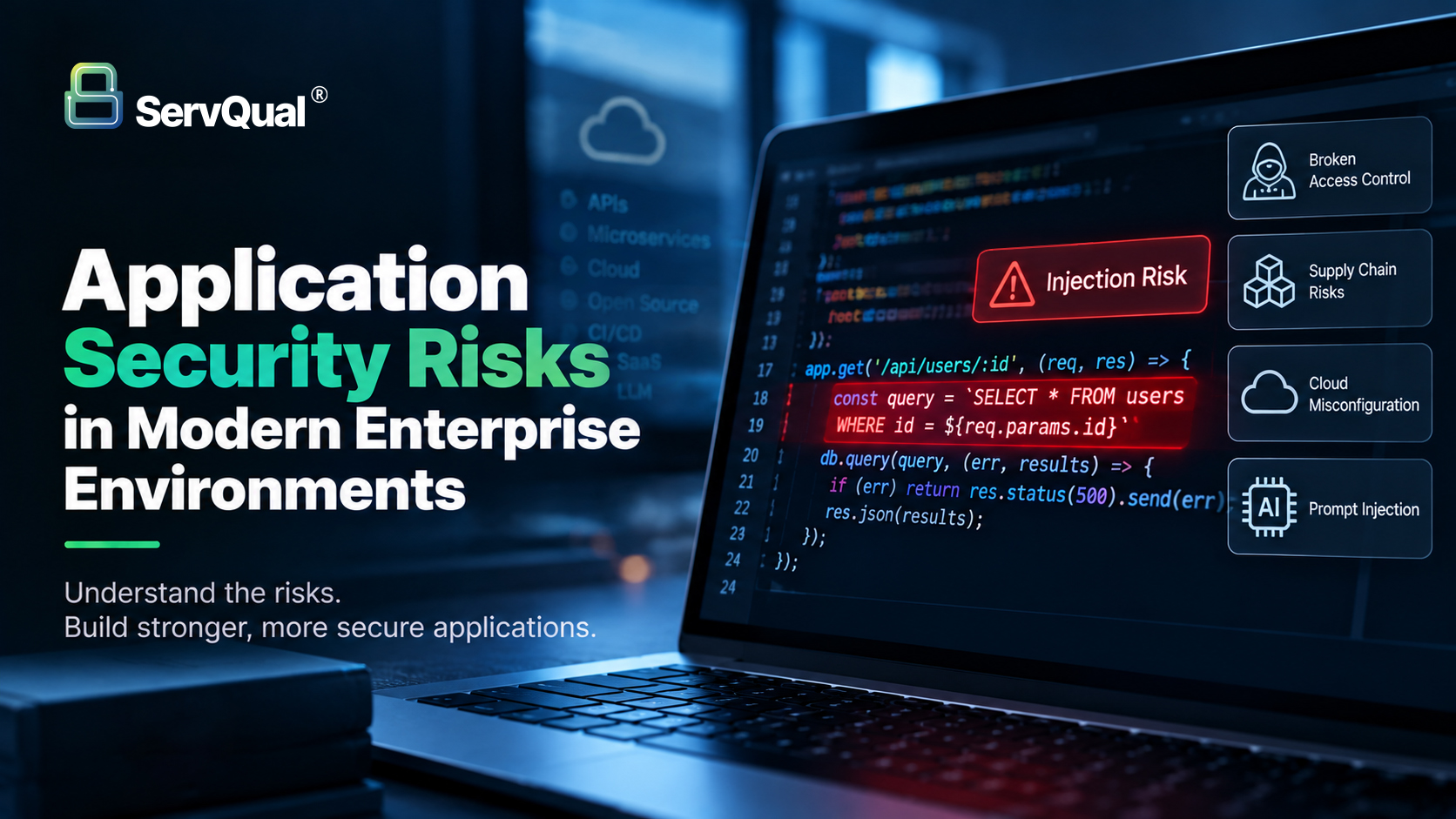
- The main risks are broken access control, injection and SSRF, software supply chain compromise, identity abuse, cloud misconfiguration, secrets exposure, API sprawl, prompt injection and insufficient logging.
- This guide explains how these risks arise and how attackers exploit them using techniques catalogued in MITRE ATT&CK. It also covers the telemetry the SOC needs to detect them, how they affect compliance, and a checklist to reduce them.
The Problem
Enterprise application architectures have changed faster than many security programs. A single business application may now consist of many microservices running in containers or serverless functions. Those services are exposed through public and partner APIs, authenticated through a cloud identity provider and assembled from a large number of open-source dependencies. Releases ship through automated CI/CD pipelines, and AI copilots and retrieval-augmented generation (RAG) features are being added to customer facing and internal workflows.
This creates three structural problems for security teams:
- Expanding attack surface: every new API endpoint, cloud resource, third party integration and AI feature is a potential entry point. Many are deployed without being recorded in a central asset inventory.
- Fragmented ownership: application code, cloud infrastructure, identity configuration and AI components are often owned by different teams, so risks that span these layers fall between responsibilities.
- Limited visibility: perimeter controls and periodic assessments do not show how applications behave at runtime. This leaves SOC operations with little application layer telemetry for threat detection.
As a result, application security risk is no longer limited to coding errors. It now includes identity, configuration, supply chain and AI-specific weaknesses that attackers can chain together.
Why It Matters
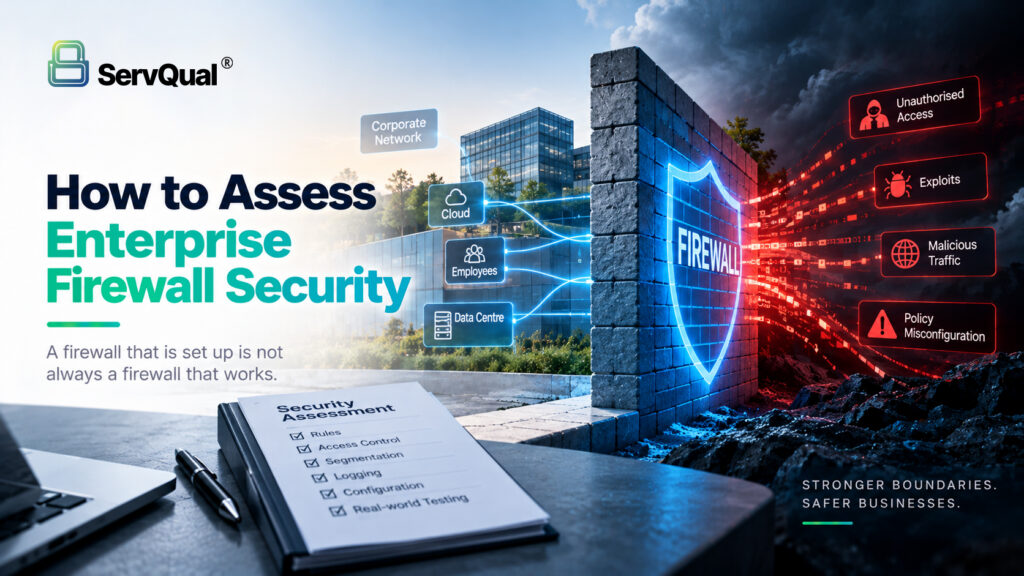
Applications process customer data, payments, intellectual property and regulated personal data, which makes them a primary target. MITRE ATTACK documents Exploit Public Facing Application (T1190) and Valid Accounts (T1078) as initial access techniques. Attackers commonly use them as the first step in intrusions that progress to credential theft, lateral movement and ransomware deployment.
- Business impact: a single authorization flaw in an API can expose records belonging to many customers. A compromised application server can become the pivot point for wider network compromise.
- Ransomware exposure: ransomware operators use exposed applications, stolen credentials and unpatched components to gain initial access. They then move laterally and encrypt systems (T1486, Data Encrypted for Impact). Reducing application risk is therefore a core part of ransomware protection.
- Regulatory consequences: data protection and financial sector regulations require appropriate security measures and timely breach reporting. An exploited application flaw can quickly become a compliance incident.
Zero trust dependency: a zero trust architecture relies on applications authenticating and authorizing every request. An application that trusts network location or unvalidated tokens undermines the whole model.
Technical Explanation: Key Application Security Risks
The following risks are the most relevant to modern enterprise environments. Each is described with its attack context and the telemetry or controls needed to detect and prevent exploitation.
1. Broken Access Control and API Authorization Flaws
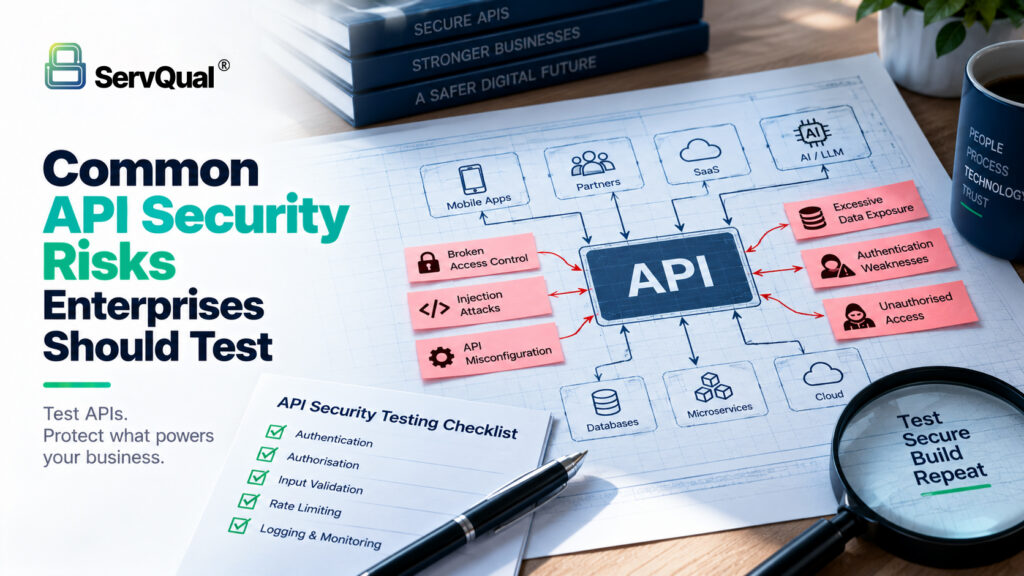
Broken access control occurs when an application fails to enforce what an authenticated user or service is allowed to do. In API-driven architectures, the most common form is Broken Object Level Authorization (BOLA), listed first in the OWASP API Security Top 10. In a BOLA attack, the attacker changes an object identifier in a request to access another user’s data. Related flaws include broken function level authorization and privilege escalation through manipulated roles or JWT claims.
Attack context: automated enumeration of object IDs, horizontal and vertical privilege escalation, and bulk data exfiltration through legitimate-looking API calls. Detection telemetry: API gateway and application logs showing high volumes of sequential object requests and authorization failures, plus behavioral analytics that flag unusual access patterns.
2. Injection Attacks and Server-Side Request Forgery (SSRF)
Injection flaws, including SQL injection, command injection and template injection, occur when untrusted input is interpreted as code or commands. Server-side request forgery (SSRF) makes the server send requests to internal resources on the attacker’s behalf. In cloud environments, SSRF is especially dangerous because it can reach instance metadata services and retrieve temporary cloud credentials.
Attack context: exploitation of public-facing applications (T1190) for initial access, followed by credential access through the Cloud Instance Metadata API (T1552.005) and pivoting into cloud control planes. Detection telemetry: WAF alerts, database query anomalies, outbound requests from application servers to metadata endpoints or internal ranges, and EDR alerts for unexpected child processes spawned by web server processes.
3. Vulnerable Components and Software Supply Chain Risk
Modern applications depend heavily on open-source libraries, container base images and third-party SDKs. A vulnerability in a widely used component can affect a very large number of applications at once, as Log4Shell (CVE-2021-44228) in Apache Log4j 2 showed. Supply chain risk also includes malicious or compromised packages, dependency confusion and tampered build artifacts.
Attack context: Supply Chain Compromise (T1195) and exploitation of known CVEs in internet-facing components. Controls: Software Composition Analysis (SCA), a maintained Software Bill of Materials (SBOM), container image scanning, artifact signing, and vulnerability intelligence mapped to the application inventory so affected systems can be found quickly.
4. Identity, Authentication and Session Weaknesses
Many application breaches involve identity rather than code defects. Common weaknesses include missing or bypassable multi-factor authentication (MFA), password policies that allow credential stuffing, misconfigured OAuth 2.0 and OpenID Connect flows, long-lived tokens and insecure session management. Over-privileged service accounts and machine identities extend this risk to application-to-application traffic.
Attack context: Valid Accounts (T1078), Brute Force (T1110) including credential stuffing, and Steal Application Access Token (T1528). Detection telemetry: identity provider sign-in logs, impossible-travel and anomalous-login detections, token reuse from unexpected locations, and UEBA baselines for service accounts. Strong identity security and IAM governance are central to zero trust enforcement.
5. Cloud Misconfiguration and Posture Drift
Applications deployed on AWS, Microsoft Azure or Google Cloud inherit risk from their surrounding cloud configuration. Common findings include publicly exposed storage, permissive security groups, over-privileged IAM roles, unencrypted data stores and disabled logging. Infrastructure-as-Code (IaC) speeds up deployment but can copy one misconfiguration across many environments, while manual changes cause posture drift over time.
Attack context: Data from Cloud Storage (T1530) and abuse of excessive IAM permissions. Controls: Cloud Security Posture Management (CSPM) for continuous cloud posture assessment against benchmarks such as the CIS Benchmarks, IaC scanning in CI/CD, and cloud audit logs (AWS CloudTrail, Azure Activity Log, Google Cloud Audit Logs) forwarded to the SIEM.
6. Secrets Exposure and CI/CD Pipeline Risk
API keys, database credentials, cloud access keys and signing keys are often exposed in source code repositories, container images, build logs and configuration files. CI/CD pipelines are high-value targets because they hold privileged credentials and can push code directly to production. The OWASP Top 10 CI/CD Security Risks covers issues such as insufficient flow control mechanisms, inadequate identity and access management, and poisoned pipeline execution.
Attack context: Unsecured Credentials (T1552) and abuse of pipeline access to insert malicious code. Controls: secrets scanning, centralized secrets management, short-lived credentials, least-privilege pipeline identities, branch protection and signed commits.
7. API Sprawl and Shadow APIs
As organizations adopt microservices and partner integrations, the number of APIs grows faster than their documentation. Undocumented (shadow) APIs, deprecated (zombie) API versions and test endpoints left in production expand the attack surface without security review. The OWASP API Security Top 10 addresses this as Improper Inventory Management.
Controls: API discovery through gateway and traffic analysis, an API inventory with named owners, consistent authentication and rate limiting at the gateway, and decommissioning of unused versions.
8. AI and LLM Application Risks
Integrating LLMs into applications, copilots and AI agents introduces risks that traditional AppSec testing does not fully cover. The OWASP Top 10 for LLM Applications identifies prompt injection as a leading risk. In prompt injection, crafted input manipulates model behavior; in indirect prompt injection, the instructions are hidden in documents that a RAG pipeline retrieves. Related risks include sensitive information disclosure, improper output handling, excessive agency in tool-using agents, and data and model poisoning.
Attack context: MITRE ATLAS catalogs adversary techniques against AI systems, including prompt injection and poisoning. Controls for AI security and LLM security: threat modeling of AI data flows, least-privilege tool permissions, output validation, entitlement-aware retrieval from vector databases, prompt and response logging for monitoring, and AI red teaming.
9. Insufficient Logging, Monitoring and Detection
Applications that do not log authentication events, authorization failures, input validation errors and administrative actions leave the SOC unable to detect or investigate attacks. Logs that are collected but never correlated add little value.
Controls: define security-relevant application events and forward them to the SIEM alongside cloud, identity and endpoint telemetry. Correlate them with EDR and behavioral analytics, and use detection engineering to build and test rules mapped to MITRE ATT&CK techniques. The same telemetry is essential evidence for incident response and forensic investigation.
Risk-to-Attack-to-Telemetry Mapping
| Risk | MITRE ATT&CK / ATLAS reference | Key telemetry and controls |
|---|---|---|
| Broken access control / BOLA | T1190 Exploit Public-Facing Application | API gateway logs, authorization failure logs, behavioral analytics |
| Injection and SSRF | T1190, T1552.005 Cloud Instance Metadata API | WAF logs, outbound traffic monitoring, EDR process telemetry |
| Vulnerable components | T1195 Supply Chain Compromise | SCA, SBOM, container image scanning, vulnerability intelligence |
| Identity weaknesses | T1078, T1110, T1528 | Identity provider sign-in logs, UEBA, token monitoring |
| Cloud misconfiguration | T1530 Data from Cloud Storage | CSPM findings, cloud audit logs in the SIEM |
| Secrets and CI/CD | T1552 Unsecured Credentials, T1195 | Secrets scanning, pipeline audit logs |
| AI / LLM risks | MITRE ATLAS | Prompt and response logs, guardrail alerts, AI red teaming |
| Logging failures | Detection gap across all tactics | SIEM coverage reviews, detection engineering |
Compliance Impact
Application security risks translate directly into obligations under security, privacy and sector regulations:
- PCI DSS v4.0: Requirement 6 covers secure development of bespoke and custom software, identifying and addressing vulnerabilities, and protecting public facing web applications. Requirement 10 covers logging and monitoring, and Requirement 11 covers vulnerability scanning and penetration testing.
- ISO/IEC 27001:2022: relevant Annex A controls include 8.8 Management of technical vulnerabilities, 8.9 Configuration management, 8.15 Logging, 8.16 Monitoring activities, 8.25 Secure development life cycle, 8.28 Secure coding and 8.29 Security testing in development and acceptance.
- SOC 2: the Trust Services Criteria require evidence of logical access controls, change management, vulnerability management and system monitoring.
- GDPR: Article 32 requires appropriate technical and organizational security measures. Article 33 requires notifying the supervisory authority of a personal data breach within 72 hours where feasible.
- India DPDP Act, 2023 and CERT-In Directions: the DPDP Act requires Data Fiduciaries to implement reasonable security safeguards and to report personal data breaches to the Data Protection Board of India and affected Data Principals. CERT In’s April 2022 directions require specified cyber incidents to be reported within six hours of noticing them.
- DORA and NIS2: DORA sets ICT risk management and incident reporting requirements for EU financial entities. NIS2 Article 21 requires risk management measures that include security in system development and maintenance, and vulnerability handling.
For compliance teams, the key point is that application security controls produce the evidence auditors ask for: secure development records, vulnerability remediation timelines, access reviews and security logs.
Example Use Case
This scenario is illustrative and does not describe a specific organization or incident.
A financial services enterprise launches a mobile banking feature built on cloud microservices and exposed through REST APIs. The feature includes an LLM powered assistant that answers account questions using a RAG pipeline. A security review finds the following risks:
- An account statement API returns data based on an account ID in the request without verifying ownership (a BOLA risk).
- A container image includes an outdated open source library with a known critical CVE.
- The CI/CD pipeline uses a long-lived cloud access key stored as a plain environment variable.
- The AI assistant retrieves documents without applying the user’s entitlements and has no defense against indirect prompt injection.
- API gateway logs are kept locally and are not forwarded to the SIEM.
Remediation approach
- Enforce object level authorization in the API and add automated authorization tests to the pipeline.
- Add SCA and container image scanning with build-blocking thresholds, and maintain an SBOM.
- Replace static keys with short lived workload identities and least-privilege IAM roles.
- Apply entitlement aware retrieval, input and output guardrails, and prompt and response logging to the AI assistant.
- Forward API gateway, cloud audit and identity logs to the SIEM, with detections for object enumeration, metadata service access and anomalous token use.
- Map the controls and evidence to PCI DSS, ISO/IEC 27001 and DPDP Act obligations.
The result is one documented view of the application’s risks, controls, detections and compliance evidence, which can be reviewed continuously as the application changes.
Application Security Risk Checklist
| # | Area | Control check |
|---|---|---|
| 1 | Asset inventory | Maintain an inventory of applications, APIs, cloud resources and AI services, with owners and data classification. |
| 2 | Threat modeling | Threat model new applications and major changes, including AI data flows. |
| 3 | Access control | Enforce server-side object- and function level authorization on every request. |
| 4 | Secure coding | Run SAST and secure code review on every change; train developers on common flaws. |
| 5 | Dependencies | Run SCA, maintain SBOMs and track CVEs in third party components. |
| 6 | Secrets | Scan repositories and images for secrets; use centralized secrets management. |
| 7 | CI/CD | Use least-privilege pipeline identities, branch protection and artifact signing. |
| 8 | Identity | Enforce MFA, secure OAuth/OIDC configuration, short-lived tokens and service account governance. |
| 9 | Cloud posture | Use CSPM and IaC scanning; remove public exposure and excessive IAM permissions. |
| 10 | API security | Discover and inventory APIs; enforce authentication, rate limiting and schema validation at the gateway. |
| 11 | Runtime protection | Deploy WAF and runtime protection for internet facing applications. |
| 12 | AI / LLM | Apply prompt injection defenses, output validation, entitlement-aware retrieval and tool permission limits. |
| 13 | Logging | Log authentication, authorization and admin events; forward them to the SIEM with EDR and cloud telemetry. |
| 14 | Detection engineering | Build and test detections mapped to MITRE ATTACK, and review coverage regularly. |
| 15 | Security testing | Perform DAST, penetration testing and AI red teaming based on risk and change. |
| 16 | Incident response | Maintain application playbooks and breach notification procedures aligned to GDPR, DPDP Act and CERT In timelines. |
| 17 | Compliance evidence | Map controls to PCI DSS, ISO/IEC 27001, SOC 2 and other applicable frameworks. |
How ServQual and SUSAN Help
ServQual SUSAN (ServQual Unicorn Security Assessment Nexus) is a GenAI powered cybersecurity, privacy and GRC automation platform built on AWS. Together with ServQual’s security testing and managed security services, it helps enterprises identify application security risks and manage them continuously against their compliance obligations.
- Application and AI security testing: ServQual delivers Vulnerability Assessment and Penetration Testing (VAPT), application security evaluations and AI security assessments, including LLM security testing and RAG security assessment.
- AI risk scoring and decision intelligence: SUSAN connects data, evidence, assets, controls, vulnerabilities and regulatory context. It correlates obligations with risks and evidence to produce risk scores, recommendations and compliance dashboards, helping teams prioritize application risks by business and regulatory impact.
- Attack surface and cloud visibility: asset inventory, automated data discovery and classification, and multi cloud security validation support the inventory and cloud posture items in the checklist above.
- Continuous compliance evidence: SUSAN automates assessments across frameworks including ISO 27001, SOC 2, GDPR, NIST CSF, DORA and India’s DPDP Act, and maintains continuous evidence with defensible decision trails. ServQual also supports PCI DSS compliance programs.
- Incident response and SOC operations: SUSAN includes an Incident Response Planning (IRP) module with built in templates, and ServQual provides Managed SOC and SOCaaS services for security monitoring and threat detection.
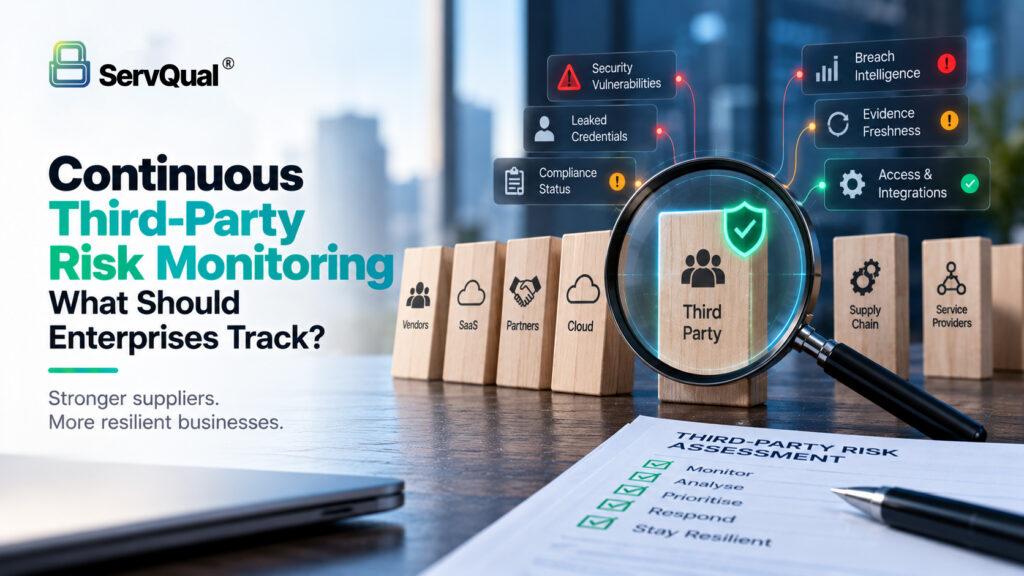
Third-party risk: vendor risk assessment and third party risk management extend oversight to the suppliers and components applications depend on.
“Modern application security is no longer only about code. Risk now spans APIs, identity, cloud, software supply chains, CI/CD pipelines and AI-enabled application workflows.”

Himanshu Warulkar
Front-End Developer | ServQual
FAQ
Most frequent questions and answers
Common risks include broken access control and API authorization flaws, injection and SSRF, vulnerable components, identity weaknesses, cloud misconfiguration, secrets exposure, API sprawl, AI and LLM risks, and insufficient logging.
Exposed applications, stolen credentials and unpatched components can provide initial access. Attackers can then escalate privileges, move laterally and deploy ransomware.
Broken Object Level Authorization occurs when an API does not properly verify whether a user is permitted to access a requested object. Attackers may manipulate object identifiers to access another user’s data.
Applications depend on open-source libraries, container images and third-party SDKs. Vulnerable or malicious dependencies can introduce risk across many applications at once, making SCA, SBOMs, image scanning and artifact signing important controls.
Applications inherit risk from surrounding cloud configurations. Public storage, excessive IAM permissions, weak logging and insecure network configuration can expose otherwise secure applications.
Prompt Injection uses crafted input, including instructions hidden in retrieved content, to manipulate LLM behavior. It can lead to data disclosure or unauthorized actions when AI systems are connected to enterprise data or tools.
The SOC correlates application, identity, cloud and endpoint telemetry in the SIEM and uses detection engineering to identify exploitation attempts and investigate incidents.
ServQual provides VAPT, application security evaluations, AI Security Assessment, LLM Security Testing, RAG Security Assessment, Managed SOC and Incident Response services. SUSAN supports AI Risk Scoring, control mapping, remediation ownership, evidence tracking and continuous compliance visibility.
Strengthen Your Application Security Posture
Identify risks across applications, APIs, cloud, identity, CI/CD and AI with ServQual Application Security testing and continuous risk visibility through SUSAN.
Disclaimer: This article is provided for general Cybersecurity guidance and does not constitute legal, regulatory or compliance advice. Security risks, control requirements and remediation priorities vary by application architecture, business context and applicable obligations.