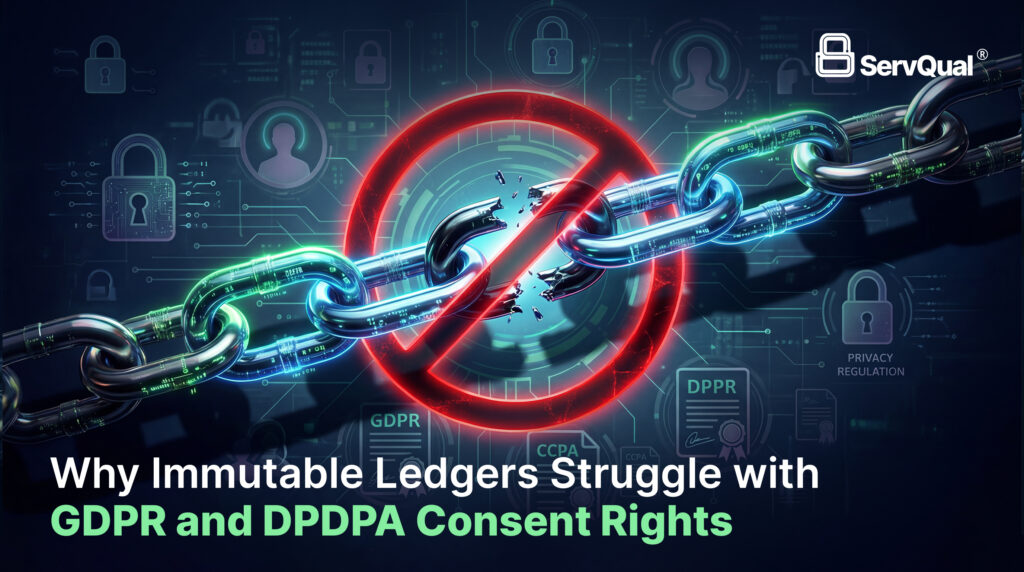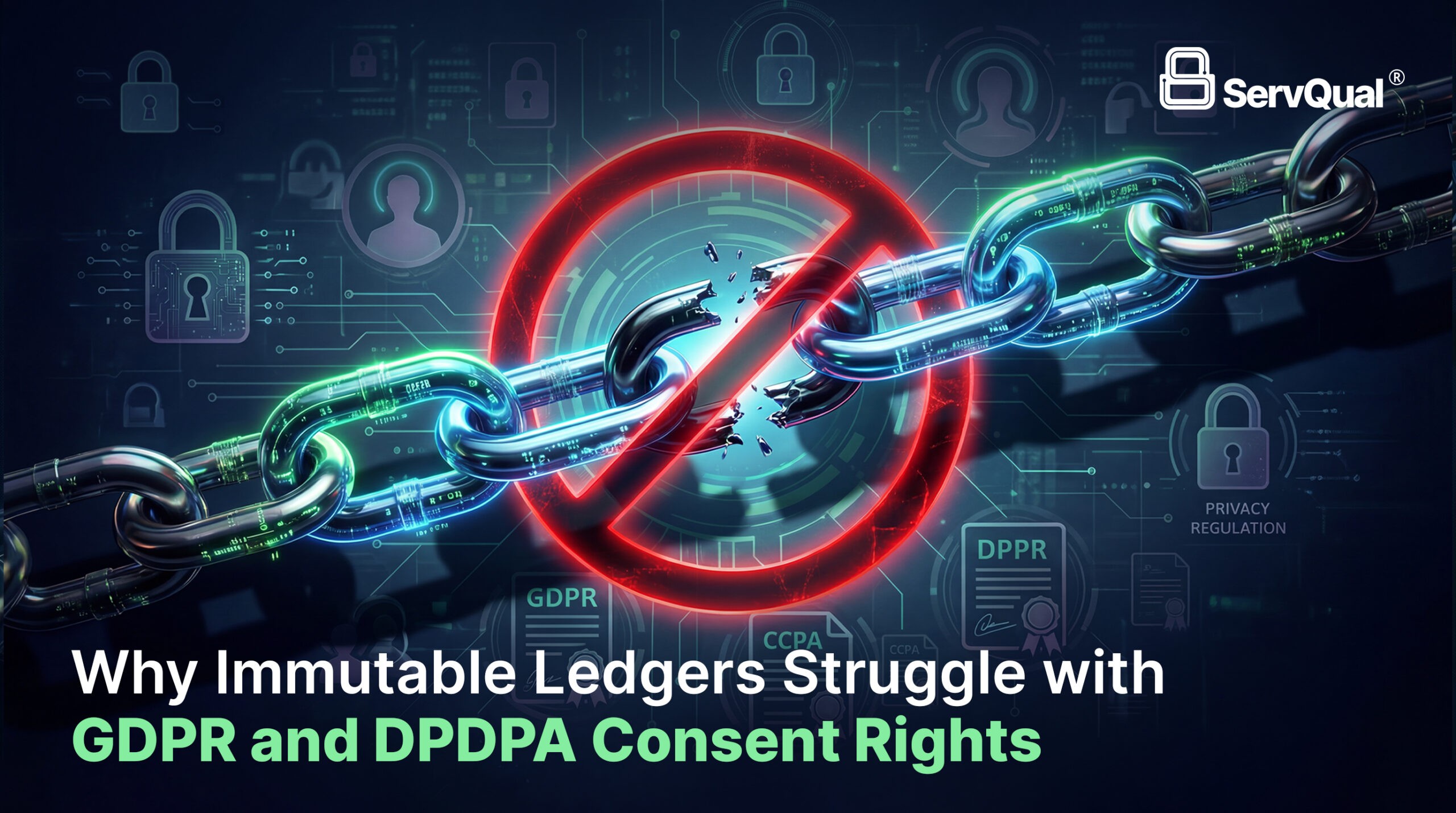
Blockchain is often positioned as the ultimate solution for trust, transparency, and tamper-proof recordkeeping. But when it comes to modern data privacy lawsblockchain introduces as many challenges as it solves.
The Core Conflict: Immutability vs. Privacy Rights
Privacy laws are built around user control. Individuals must be able to:
- Withdraw consent at any time
- Request correction of their data
- Exercise the “right to be forgotten”
Blockchain, by design, creates immutable records. This creates a direct tension: how do you modify or erase something that is meant to be permanent?
Consent is Dynamic, Not Permanent
Under GDPR and DPDPA, consent is not a one-time event . It evolves with context.
A key requirement under DPDPA is that fresh consent must be obtained when there is a material change in:
- Purpose
- Scope
- Manner of processing
Blockchain cannot determine what qualifies as a “material change.” It can only record events not interpret them. That responsibility sits with legal and application layers.
Case Study: When Consent Evolves
Consent is not static it evolves with the individual.
Consider:
- A child turning 18 and becoming legally capable of giving consent
- A person with disabilities whose lawful guardian changes over time
Blockchain preserves all historical states permanently. This leads to:
- Conflicting authority records (guardian vs. self)
- Outdated permissions remaining visible and potentially misinterpreted
- Increased complexity in determining the current valid consent
Privacy frameworks require clarity about who has authority now ?
What Blockchain Can Do Well
Blockchain does add value in one area: auditability.
It can:
- Prove that consent existed at a specific point in time
- Provide tamper-evident logs
- Enable verification across multiple parties
This is useful in low-trust, multi-party ecosystems.
Where It Falls Short
Blockchain alone cannot:
- Enforce withdrawal of consent
- Delete or correct personal data
- Interpret legal thresholds like “material change”
- Ensure compliance with evolving user context
Any compliant system must keep personal data and active consent states off-chain, where they can be updated or erased.
The Practical Reality
Most privacy-compliant systems follow a simpler model:
- Mutable consent layer → reflects current reality
- Auditable logs → preserve history for accountability
This aligns directly with how GDPR and DPDPA are designed.
The Bottom Line
Blockchain supports compliance through traceability, not control.
It is excellent at proving the past but privacy laws are about governing the present.
"Blockchain secures the past. Privacy laws govern the present."

Purva Jadhav
Product Manager | ServQual
FAQS
We serve B2B SaaS companies, financial institutions, healthcare providers, manufacturing firms, and legal consultancies.
Yes, we have a UK-based team providing 24/7 incident response and support.
Absolutely. We specialize in regulatory compliance and offer full support from gap assessment to certification readiness.
Unlike large vendors, we provide agile, personalized cybersecurity services backed by global expertise and UK-specific support.