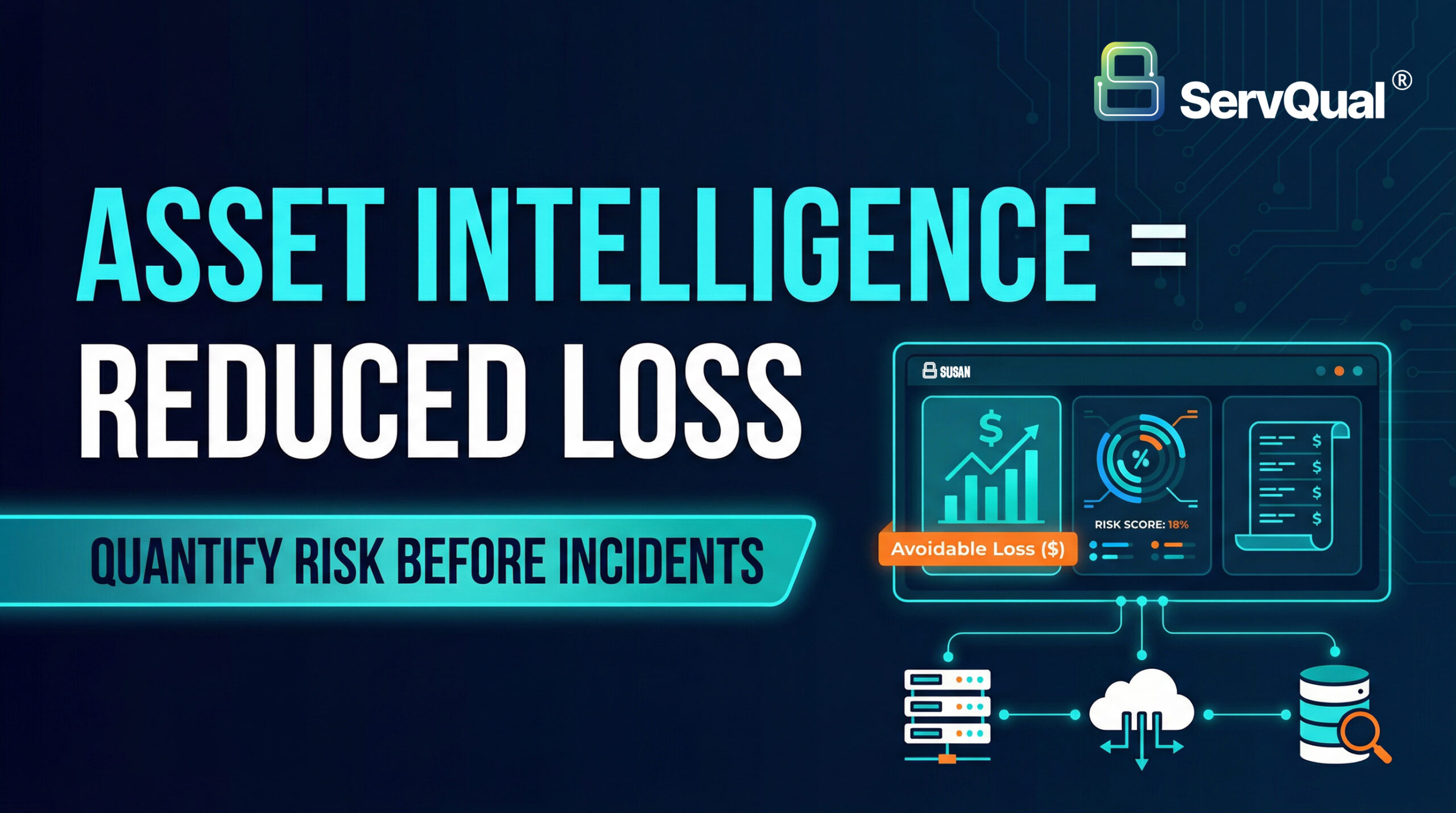
Asset intelligence is the process of connecting every digital asset to business ownership, data sensitivity, operational dependency, compliance scope and financial risk. It helps organizations move beyond basic inventory lists and understand which assets create the greatest business exposure before a cyber incident occurs.
Executive Summary
You cannot manage what you cannot see, and you cannot prioritize what you cannot measure.
Most security programs maintain some form of asset inventory. They may know which systems, cloud resources, applications, databases, endpoints or SaaS platforms exist. However, many organizations cannot answer the question that matters most to leadership:
If this specific asset were compromised tomorrow, how much could it cost the business?
Asset intelligence closes that gap. It goes beyond listing devices and systems. It adds business context such as ownership, data sensitivity, regulatory scope, operational dependency, control coverage and potential financial impact.
This allows organizations to express cybersecurity risk in business terms, including probable financial loss, operational disruption, regulatory impact and remediation priority.
Why Asset Visibility Breaks Down
Modern digital environments no longer sit behind one clear perimeter.
Assets are created, modified, migrated and decommissioned continuously across:
- Cloud accounts
- SaaS platforms
- Databases
- APIs
- Networks
- Endpoints
- Containers
- Identity systems
- Third-party integrations
- Development and test environments
Cloud resources may be created by individual teams. SaaS applications may be adopted department by department. Contractors may connect through unmanaged devices. Machine identities may multiply faster than security teams can track them.
The result is predictable. Asset inventories drift out of date. Risk assessments are performed only against known assets. The riskiest assets are often the ones nobody owns, nobody monitors and nobody includes in compliance evidence.
The cost of this blind spot appears as:
- Shadow IT
- Orphaned cloud resources
- Unknown internet-facing systems
- Sensitive data stored in unmanaged locations
- Slow incident response
- Weak ownership and accountability
- Audit evidence gaps
- Compliance issues discovered too late
- Increased exposure to data breaches
By the time an unmanaged asset is discovered, it may already be part of an incident, audit finding or regulatory review.
From Inventory to Intelligence
A traditional inventory tells you that an asset exists.
Asset intelligence tells you what that asset means to the business.
The difference is the business and security context layered onto each asset.
Important asset intelligence attributes include:
- Asset owner
- Business unit
- Environment
- Location or region
- Cloud provider
- Business criticality
- Data sensitivity
- Regulatory scope
- Internet exposure
- Identity and access footprint
- Patch posture
- Known vulnerabilities
- Dependency mapping
- Control coverage
- Remediation status
- Audit evidence
Once these attributes exist, prioritization changes.
A critical vulnerability on an isolated test server is not the same as a moderate vulnerability on a customer-facing database containing regulated personal data.
Severity is still important, but it is not enough by itself. Business impact, data sensitivity, regulatory scope and exposure determine the true priority.
How Asset Intelligence Quantifies Risk
Risk quantification converts technical exposure into business impact.
A simple way to think about it is:
Risk is influenced by the likelihood of compromise and the business impact of compromise.
Likelihood is affected by:
- Internet exposure
- Known vulnerabilities
- Misconfiguration
- Identity and access weakness
- Patch posture
- Monitoring coverage
- Threat exposure
- Attack surface visibility
Business impact is affected by:
- Asset value
- Data sensitivity
- Regulatory obligations
- Business dependency
- Operational downtime
- Customer impact
- Legal exposure
- Reputational damage
- Incident response cost
Two useful concepts for quantifying risk are Single Loss Expectancy and Annualised Loss Expectancy.
SLE means Single Loss Expectancy.
SLE = Asset Value × Exposure Factor
ALE means Annualised Loss Expectancy.
ALE = SLE × Annual Rate of Occurrence
These calculations help organizations estimate probable financial exposure and prioritize remediation based on business risk, not only technical severity.
Perfect data is not required to begin. Even rough, consistently applied estimates can help rank assets by potential annual loss and direct budget toward the exposures that matter most.
Worked Example: Unmanaged Cloud Storage Risk
Consider a mid-sized financial services organization with hundreds of cloud resources across multiple business units.
A security review identifies an unmanaged cloud storage bucket created for a marketing campaign two years earlier. The bucket was never decommissioned.
Asset intelligence adds context:
- No assigned owner
- Public internet exposure
- Customer records present
- Personal data involved
- DPDPA compliance scope
- No active monitoring
- Weak remediation ownership
Without asset intelligence, the bucket may appear as just another cloud resource. With asset intelligence, it becomes a high-risk business exposure.
The organization can estimate:
- What type of data is exposed
- How many records may be affected
- Which compliance obligations apply
- Which business unit owns the asset
- What remediation is required
- Whether the issue should be escalated
- What evidence is needed for audit and governance
This turns a technical finding into a leadership-level risk decision.
SUSAN’s Risk-Centric CMDB
A traditional Configuration Management Database lists assets.
A Risk-Centric CMDB connects assets to risks, controls, compliance obligations and business impact.
SUSAN helps organizations centralize asset intelligence across cloud environments, networks, databases, applications and business systems.
Key capabilities include:
- Tracking assets with owner, location and business value
- Mapping assets to risks, controls and compliance requirements
- Maintaining accountability and traceability across teams
- Supporting bulk updates through structured templates
- Connecting asset data with risk and compliance workflows
- Improving audit readiness through evidence visibility
This helps Risk Managers, GRC teams, CISOs, Security Operations, Compliance Managers and IT Asset Owners turn asset data into governance decisions.
From Asset Intelligence to Financial Risk Insights
SUSAN supports risk visibility by helping organizations connect assets, risks, controls and compliance obligations into one assurance view.
Instead of only listing assets, organizations can analyze which assets create the highest exposure and which remediation actions should be prioritized.
This helps leadership:
- Justify security budgets
- Prioritize remediation based on financial impact
- Communicate cyber risk in business terms
- Improve governance accountability
- Reduce audit evidence gaps
- Track control effectiveness
- Support continuous compliance visibility
When asset intelligence, risk scoring and compliance evidence live in one place, decisions become faster and more defensible.
Turning Asset Intelligence into Governance
Quantified asset risk only matters if it feeds the processes that act on it.
Asset intelligence strengthens governance, risk and compliance by creating a shared source of truth across teams.
Compliance teams can identify which assets fall under GDPR, DPDPA, ISO 27001, PCI DSS or internal privacy requirements.
Risk owners can track the highest business exposure and report progress in financial terms.
Security operations teams can respond faster because compromised assets already include ownership, criticality, data sensitivity and dependency information.
Leadership teams can view risk in terms of business impact, not only technical findings.
Over time, this supports:
- Audit readiness
- Continuous compliance monitoring
- Risk ownership
- Remediation tracking
- Security posture management
- Business impact analysis
- Control validation
- Compliance evidence management
Asset Intelligence Checklist
Organizations should use this checklist to improve asset intelligence:
- Maintain an accurate and continuously updated asset inventory
- Assign asset owners
- Classify assets by business criticality
- Classify assets by data sensitivity
- Map assets to compliance obligations
- Identify internet-facing assets
- Identify assets with sensitive data exposure
- Track identity and access permissions
- Review patch posture and known vulnerabilities
- Map assets to risks and controls
- Prioritize remediation by business impact
- Maintain audit evidence
- Monitor asset changes regularly
- Review cloud, SaaS and third-party dependencies
- Track remediation status
- Report risk in business terms
How SUSAN Supports Asset Intelligence
SUSAN, ServQual’s AI driven cybersecurity, privacy and GRC platform, helps organizations connect asset visibility, risk quantification and compliance evidence into a single governance workflow.
SUSAN supports:
- Asset inventory and visibility
- Risk-Centric CMDB workflows
- Risk assessment and tracking
- Governance, Risk and Compliance management
- Policy and control management
- Audit and evidence management
- Compliance monitoring and reporting
- Control ownership
- Compliance evidence tracking
- Continuous assurance
- Risk prioritization for leadership
By connecting asset intelligence, risk scoring and GRC visibility, SUSAN helps organizations identify exposures earlier, prioritize remediation more clearly and improve audit readiness.
“SUSAN translates what you own into actionable risk insights, helping teams across your organisation understand risk exposure and potential financial impact in real time.”

Dara Sturgeon
Security Success Manager | ServQual
FAQ
Most frequent questions and answers
Asset intelligence is the process of adding business, security and compliance context to assets so organizations can understand ownership, criticality, data sensitivity, exposure and potential business impact.
Asset inventory lists what exists. Asset intelligence explains what each asset means to the business, who owns it, what data it holds, which risks apply and how much exposure it may create.
Asset intelligence helps organizations prioritize remediation based on business impact, data sensitivity, exposure and compliance scope instead of relying only on technical severity.
SLE stands for Single Loss Expectancy and estimates loss from one event. ALE stands for Annualised Loss Expectancy and estimates expected annual loss based on event likelihood.
Asset intelligence helps organizations map assets to frameworks, data protection obligations, control requirements and audit evidence, making compliance monitoring and audit readiness easier.
Poor asset visibility can create shadow IT, unmanaged cloud resources, sensitive data exposure, weak incident response, missed vulnerabilities, unclear ownership and audit evidence gaps.
SUSAN helps organizations centralize asset visibility, risk tracking, compliance evidence, control ownership and governance workflows so teams can prioritize exposure before incidents occur.
Understanding your assets is the first step toward effective cyber risk management.
Manual inventories and disconnected tools can leave gaps that attackers, auditors and regulators may expose later.
Explore SUSAN, ServQual’s AI driven cybersecurity, privacy and GRC platform, or contact ServQual to discuss how your organization can improve asset intelligence, risk visibility, compliance evidence and audit readiness.